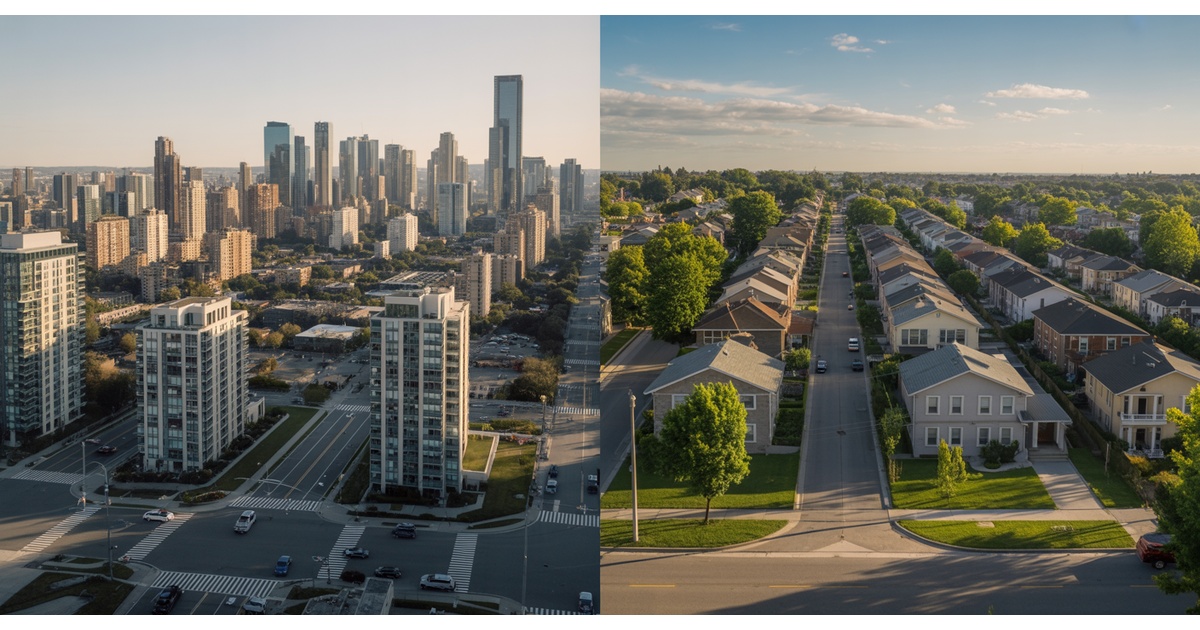
A $100,000 salary in San Francisco provides the same purchasing power as $53,000 in Nashville. Understanding cost of living differences is critical whether you're relocating for a job, retiring to a new state, or simply wondering if you're overpaying to live where you do.
This comprehensive guide breaks down every cost category you need to compare: housing, taxes, groceries, transportation, utilities, healthcare, and more. Use our data-driven approach to calculate exactly what you need to earn in any ZIP code to maintain your lifestyle.
What You'll Learn
- Complete cost breakdown by category
- How to calculate salary equivalents
- Hidden costs most people overlook
- State tax differences by ZIP code
- Real-world cost comparisons (6 cities)
- How to use our comparison tool
Helpful Resources
Hotels.com - Visit Before You Move
Book accommodations to explore your new city before relocating
Find Hotels →Choice Home Warranty
Protect your new home with comprehensive warranty coverage
Get Free Quote →Sponsored links • We may earn a commission
7 Major Cost Categories to Compare
1. Housing (28-35% of budget)
The single largest expense. Includes mortgage/rent, property taxes, homeowners insurance, and HOA fees.
Pro Tip: Use our ZIP code comparison tool to see median rent and home prices in any neighborhood.
2. State & Local Taxes (0-13%)
State income tax, sales tax, and property tax rates vary dramatically. Some states have no income tax at all.
No State Income Tax:
- ✅ Texas (Austin, Dallas, Houston)
- ✅ Florida (Miami, Tampa, Orlando)
- ✅ Tennessee (Nashville, Memphis)
- ✅ Washington (Seattle)
- ✅ Nevada (Las Vegas)
Highest State Income Tax:
- ❌ California (up to 13.3%)
- ❌ New York (up to 10.9%)
- ❌ New Jersey (up to 10.75%)
- ❌ Oregon (up to 9.9%)
- ❌ Minnesota (up to 9.85%)
Real Impact: On a $100K salary, California's 9.3% state tax = $9,300/year. In Texas: $0.
3. Transportation (10-20%)
Car payment, insurance, gas, maintenance, parking—or transit passes if you're car-free.
✅ Car-Free Possible
- • NYC (~$130/mo transit)
- • SF (~$80/mo Muni)
- • Chicago (~$100/mo CTA)
- • DC (~$80/mo Metro)
❌ Car Required
- • Most suburbs ($400-600/mo)
- • Phoenix ($350-500/mo)
- • Atlanta ($400-600/mo)
- • Houston ($400-600/mo)
4. Groceries & Food (10-15%)
Grocery costs vary 30-40% across the US. Urban areas tend to be more expensive.
Real-World Cost Comparisons
| City (ZIP) | Housing | Taxes | Groceries | Transport | Total/Mo | Salary Needed |
|---|---|---|---|---|---|---|
| San Francisco, CA (94103) | $4,800 | $1,100 | $520 | $150 | $6,750 | $120,000 |
| NYC (10001) | $4,200 | $1,050 | $480 | $127 | $6,017 | $110,000 |
| Austin, TX (78701) | $2,400 | $0 | $380 | $250 | $3,175 | $80,000 |
| Denver, CO (80202) | $2,200 | $180 | $360 | $220 | $3,090 | $75,000 |
| Nashville, TN (37203) | $1,900 | $0 | $340 | $280 | $2,655 | $65,000 |
| Phoenix, AZ (85004) | $1,650 | $105 | $330 | $260 | $2,500 | $60,000 |
Note: Monthly totals for a single professional. Family costs 2-3x higher. Salary needed calculated at 35% tax rate + 20% savings.
Helpful Resources
Aceable Real Estate School
Get your real estate license online with flexible courses
Start Learning →Choice Home Warranty
Essential home protection for your real estate investment
Get Coverage →Sponsored links • We may earn a commission
Hidden Costs People Overlook
💰 Childcare Costs
Daycare ranges from $600/mo in rural areas to $2,500/mo in NYC and SF. For two kids, this can exceed rent.
National average: $1,200/mo per child
🏥 Healthcare Premiums & Deductibles
Family health insurance: $800-1,500/mo. High-deductible plans can mean $5K-10K out-of-pocket before coverage kicks in.
❄️ Heating & Cooling Costs
Minnesota winter heating: $300/mo. Arizona summer AC: $250/mo. Mild climates save $100-200/mo year-round.
🅿️ Parking Costs
Urban parking: $200-500/mo. Manhattan can exceed $700/mo. Suburban homes include free parking.
The Bottom Line
Cost of living comparisons are essential for making informed decisions about where to live. A higher salary doesn't always mean more money in your pocket—what matters is purchasing power after accounting for housing, taxes, and all other expenses.
Use our comparison tool to see how your current salary translates to different ZIP codes. You might discover that moving to a lower-cost area with a slightly lower salary actually increases your savings and quality of life.
Remember: The "cheapest" place isn't always the best value. Consider career opportunities, quality of life, schools, and long-term financial goals when making your decision.
Compare Cost of Living in Any ZIP Code
Use our free comparison tool to see housing costs, income, and demographics across 31,000+ verified U.S. ZIP codes.
Related Articles
Data Methodology Note: Demographic figures in this article come from the U.S. Census Bureau American Community Survey (5-year estimates), and home-value figures from Zillow (ZHVI). Values reflect each source's vintage or as-of month, not live figures, and should be verified with the official source for critical decisions. Learn more about our data sources and methodology.